Showing posts with label Medieval church. Show all posts

Wednesday, 23 October 2013

The Scots and the English Coronations

Edward I is best known as "The Hammer of the Scots" for his numerous attacks and conquest of Scotland.  In many ways, he was the first king since the Norman conquest to instill a sense of nationalism amongst the English.  His use of nationalistic sentiments for his various conquests of Wales and Scotland created the same effect in those areas, most notably in Scotland via William Wallace, more popularly known as Braveheart.

It has been interesting for us to learn from the different perspectives of the conflict between Edward I and the Scots.

We learnt previously that the coronation chair used by English monarchs was commissioned by Edward I and has been on display in the Westminster Abbey.


Westminster Abbey has been the place for coronations of the English monarchy since William the Conqueror.


We attended a workshop at the abbey where the children found out what went wrong at the coronations of William the Conqueror and Queen Victoria.  During the workshop, the children also learnt about the symbolism and significance of various items used during the coronation process: the sceptre, the Crown Jewels, the robe, and the sword.


Our tour of the abbey was focused on kings, queens and the coronation, so we were given a guided tour of specific places inside the abbey related to our theme: the tombs of medieval kings and queens, the Tudor Lady Chapel, the burial place of a family of siblings -- Edward VI, Mary I and Elizabeth I.

While Henry III extended the abbey and had it built to the scale it is today, the coronation process is highly symbolised by two items: the coronation chair and the Stone of Scone which Edward I had snatched from the Scots during his campaigns.

We had a close look at the restored coronation chair as part of our guided tour of the abbey.  The Stone of Scone has been returned to Scotland for safekeeping, but it will be borrowed from the Scots for future coronations.  Photo taking is not allowed inside the abbey but you can get a very good idea of it from the documentary here:


This post is linked up to:
  1. Look What We Did 
  2. Hip Homeschool Hop - 10/22/13
  3. History and Geography Meme #96
  4. Collage Friday - A Productive Week
  5. Entertaining and Educational - Learning with Music
  6. Weekly Wrap-up: The One with the Battle Against Illness
  7. The Homeschool Mother's Journal {October 26, 2013}

Thursday, 17 January 2013

The tallest spire in England

The most famous thing that King John did was to sign the Magna Carta, which formed the basis of the English Law.  We watched an episode about the circumstances surrounding King John's signing of the charter from this DVD.

There are only four original copies of this document in England, one of which is held at the Salisbury Cathedral, where we visited to see the actual document.


While we were at the cathedral, we had a good look around to admire its history, architecture,


and effigies of many medieval characters.


The Tower Tour was well worth it, as we went to up the spire (the tallest in England) under the guidance of a very knowledgeable guide.  On the way up, we went through various sections of the cathedral that were otherwise inaccessible to normal visitors, and saw the buttress close up, complete with a full historical account by the guide of how various sections were put in place in the medieval period.


13th century wood nails not completely nailed in by workmen back then.


The tour has been very useful in bringing to life all that we've read about in the following books about the structure and construction of a cathedral in the Middle Ages,


as well as the documentary below:


You can find all our study related to the church in the Middle Ages here.

What about the Magna Carta?  We did see the actual copy there:


But the actual study was done at home, which I shall blog about in another history-related post next week.  Stay tuned!


This post is linked up to:
1) Look What We Did: January Link-Up
2) All Year Round Blog Carnival: Winter
3) History and Geography Meme 58
4) Weekly Wrap-Up: The One with Sunshine
5) Homeschool Mother's Journal: January 18, 2013
6) Collage Friday: It's Raining, It's Pouring!
7) It's a Wrap
8) Share it Saturday
9) The Sunday Showcase 1/19/13

Saturday, 22 December 2012

Advent: The Nativity in art and history

http://thetigerchronicle.blogspot.co.uk/search/label/Christmas

This year we decided to learn more about the sources of some of the festivals that we celebrate. 

We looked at how the Christmas story has been presented through the ages (most prominently during the Renaissance period) through great art, by looking at the collections of The Metropolitan Museum of Art online, as well as by taking the Nativities Trail at the National Gallery (the online tour is here).  The story is well represented in the following books we borrowed from the library - one with paintings from the medieval illuminated manuscripts, the other with paintings from the renaissance period:


Now that we have a good idea of how the Christmas story has been presented from an artistic and religious point of view, we decided to learn about the historical sources of the festival, as we have done back in October with finding out where Halloween had come from


This post is linked up to:
1) Homeschool Mother's Journal: December 21, 2012
2) Collage Friday - Christmas Preparations
3) Weekly Wrap-Up: The One When the World Didn't End
4) All Year Round Blog Carnival: Winter

Saturday, 29 September 2012

Fighting in the name of God?

In learning about the crusades, we started from the beginning at the First Crusade, by watching Jerusalem - The Making of a Holy City, to help us understand why Jerusalem is regarded as sacred to the Abrahamic faiths.

Following that, we wanted to understand more about the causes for the conflicts that led to crusades, so we watched The Crusades: Crescent and the Cross, which provides more food for thought.  The study of history these days very often lead to philosophical discussions such as:
  • the actions, motivations, and consequences behind historical events and figures;
  • whether and how view points can be informed or misdirected depending on the sources of historical records; and
  • the roles of faiths/religions at different times in history.

The following book provides a humours look into the perils of fighting in the First Crusade.


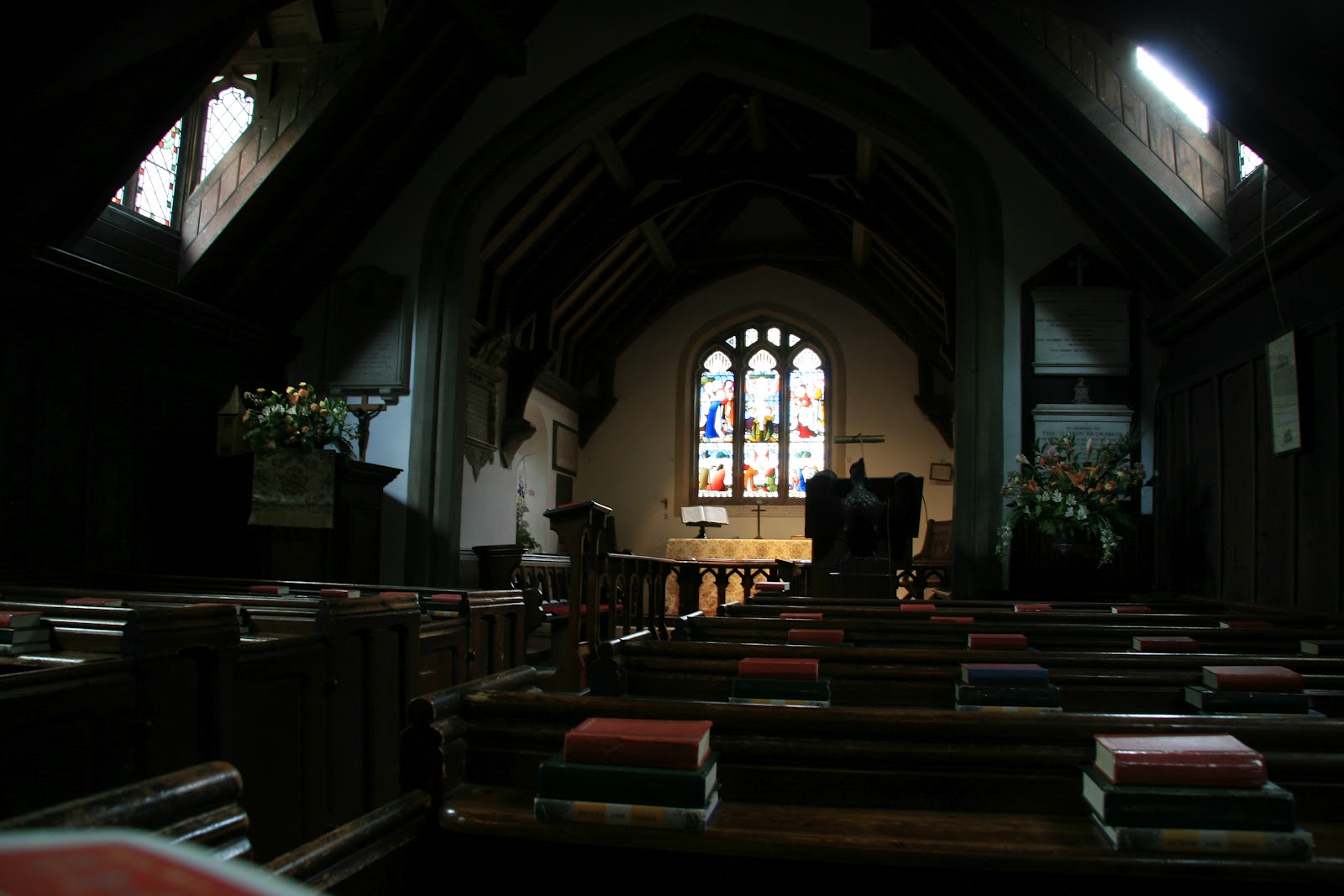
All the reading and learning from documentaries are well and good, but the most exciting part for us was when we stumbled upon an ancient church which claims to be "the oldest wooden church in the world"!  The church is still being used for services on Sundays.


The highlight of discovering this church lies on the outside of the building.  I don't normally get excited over discovering people's tombs, but there was a 12th century crusader's grave there, right outside the front entrance!  How cool is it to have seen one?!


This post is linked up to:
2) Collage Friday: Life is Short
3) Favourite Resources: September 28, 2012
4) TGIF Linky Party #49
5) Weekly Wrap-Up: The One with the Really Good Monday

Thursday, 15 December 2011

Another look at illuminated manuscripts

After our earlier attempt at producing illuminated manuscript, I said I was going get us to do more.  The more I look into the topic of illuminated manuscripts, the more fascinated I become with this labourious process of producing such masterful pieces of work.  I can even see the link between this medieval practice that began in the monasteries and the illustrated journals of present day.

There are a few places in the UK where you can go and look at actual medieval manuscripts.  Our research brought us to the V&A Museum in London.  Our trip there coincided with a workshop on medieval art, with a specific focus on the manuscripts.

The workshop was guided by an actor dressed up as a monk.  He gave the children a short guided tour in the Medieval gallery, while interweaving Norman/Anglo Saxon monastic history into the tour as he pointed out significant pieces of art work.


After the tour, the children were given 30 minutes to try their hands at illumination, using real quill pens, ink, brush and metallic paint.


Being an extremely sociable child, Tiger often cannot concentrate on his work in a group setting.  In the presence of other children, he would be more interested to talk to them and/or to look around to see what everyone else is doing -- anything but completing his own task.  Hence, his work in a group setting often show a lack of concentration.  Well, at least I can console myself that I need not worry about Tiger's ability to socialise and make friends!


While Tiger was socialising, I had a go at the exercise too.  Admittedly my output was not great either, so maybe I should not be too critical about my son's work:


The next part of the workshop incorporated drama.  The children were split into three groups to act out different scenes of the Norman/Anglo Saxon period: (1) the decision of the Angles and Saxons to come to England, (2) a day in the monastery, and (3) the Saxon reglion.

It was an interesting experience for Tiger as it was his first time acting, in the sense of being coached by a professional actor, being given lines to read and having scenes to act out with other children.  We were introduced to drama terms such as still scenes and improvisation.

Tiger found acting to be unnatural and was not too keen about some of the scenes that he had to do, but he participated in the entire session nonetheless.  Back at home, we discussed about the requirements of an actor, which is basically to try to become the character that he is given while he is on stage.  Having understood this point after our discussion, Tiger seemed to be happier at the prospect of future drama opportunities.


After the workshop, Tiger and I headed back to the gallery to have a proper look at the copies of the various manuscripts there.  Truly, we need to get more inspiration from the masters!


While we were there, we also took the opportunity to look around the Gothic gallery, to learn more about the specific features of this period in art history.  Gothic art is especially relevant to us at the moment since we have recently studied Giotto.


This post is linked up to several blog hops, where you can visit to see what other homeschoolers have been busy with.

Related Posts Plugin for WordPress, Blogger...