Showing posts with label British Museum. Show all posts

Monday, 2 January 2017

2016 Recap in Photos

Looking back at 2016, I realise that our life has changed dramatically.

While looking through these photos, I could not help seeing that homeschooling was indeed a lifestyle choice.  There are many aspects of homeschooling life that I miss, such as the ability to control our time and to engage in many uniquely interesting activities.  Nonetheless, we are where we are at this moment in life, and I am grateful for the opportunities that we have been given to enable a smooth transition from homeschooling to 'normal' schooling.

Everything from September to December zoomed past in a blur for me, so it is important that I keep the memories of what life was like for us, so that I may look back and recognise that I actually miss a lot of what was so good about our homeschooling life (I certainly don't miss the difficult bits!).

January
Highlights:
  • Time: in nature, with family, with friends
  • Sports: table tennis, climbing, archery
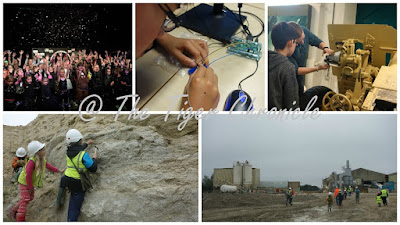
  • Classes: Chemistry lab, model aircraft, zoology, English, History
  • Studying fossils


February
Highlights:


March
Highlights:
  • Time: in nature, with family
  • Classes: model aircraft, zoology, chemistry lab, programming
  • Studying rocks and minerals
  • Special event: jazz singing concert, short story writing submission


April
Highlights:


May
Highlights:
  • Time: in nature, with friends, with family
  • Sports: table tennis
  • Classes: physics lab, forest school, model aircraft design
  • Studying art
  • Field trips: Hertford Castle, Chartwell
  • Special event: Universtiy Challenge in Chemistry (First Prize)!


June
Highlights:
  • Time: in nature, with family, reading
  • Classes: physics lab, programming
  • Studying art, ancient history, geography
  • Field trips: quarry, geological excavation site
  • Special event: jazz singing concert


July
Highlights:
  • Time: in nature, with family, with friends
  • Classes: physics lab, astronomy, model aircraft design
  • Studying art, insects, circuits
  • Special event: jazz singing concert, model aircraft competition (First Prize), percussion concert


August
Highlights:
  • Time: in nature, with family, drawing
  • Classes: physics lab, programming
  • Field trips: Cheddar Gorge
  • Special event: 'geek' gathering


September
Highlights:
  • Started attending school.
  • Resumed mountain biking.
  • Attended another 'geek' gathering.


October
Highlights:
  • No photos!
  • I was completely overwhelmed by work, and was practically just trying to survive it so did not even think to take any photos.

November
Highlights:

December
Highlights:
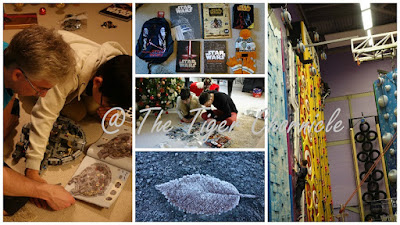
  • Time: with family, climbing
  • There's an obvious theme in this year's Christmas presents....

There is a definite lack of photos now that we spend most of our week day times apart.  I am still not used to not being the main participant of Tiger's learning journey.  It is a bitter-sweet feeling for me to see Tiger diving into his new phase of life so readily and successfully, and I am certainly glad that he is so adaptable to changes.  While I always knew that my homeschooling journey would eventually end, I was a little surprised to have it come so quickly and so suddenly.

Everything happens for a reason.  I am just so grateful that we are all in a good place right now, having the experiences that we are meant to be having for this season of our lives.


Wishing everyone a very happy 2017.

    Friday, 11 July 2014

    Our Kind of Yummy Mummies

    When I told Tiger that we were going to see some mummies at the British Museum, his immediate response (although he knew full well that I meant the Ancient Lives exhibition) was, "Are they homeschooling mummies?"


    "Well, I suppose you can say they were homeschooled, since mass schooling didn't exist in those days,"  I replied.


    The British Museum's Egyptian mummies gallery is easily the most crowded gallery at any time.  It is always packed with tourists, visitors, and school groups.  This time, the exhibition focuses on the latest technology made available to historians and archaeologists to study the insides of the mummies without unwrapping the linen.


    I am blown away by the clarity of images and the amount of new information that is made available for further research because of the use of CT scans.


    Since this is a "revision" topic for us (we studied ancient Egypt in Year 1), we also reviewed the ancient Egyptian's mummification process:


    This post is linked up to:
    1. Hip Homeschool Hop - 7/8/14
    2. History & Geography Meme #125
    3. Weekly Wrap-up: The last one of summer break
    4. The Homeschool Mother's Journal (7/12/14)

    Friday, 27 June 2014

    A Week of Duality

    It has been a week of:
    1. being at home and going out; and
    2. learning about two very different cultures
    At Home with Chinese
    We spent most of this week at home focusing on Chinese. 

    As the school year is coming to a close, Tiger has to prepare for his end-of-year Chinese exam and to complete the end-of-term projects set by his Chinese teacher.


    There are six projects to complete, which contribute to 20% of his yearly assessment:
    1.  to draw and label various parts of the body;
    2.  to construct sentences using specific words;
    3.  to translate a Chinese nursery rhyme into English;


    The nursery rhyme that we chose to translate is a traditional one to Chinese children, in much the same way as Jack and Jill is to a Western child.


    4.  to make a greeting card based on a traditional Chinese festival and write appropriate greetings inside the card;
    5.  to research and write about a traditional Chinese festival;
    6.  to research and write two sets of questions and answers about some geographical aspects of China.


    Tiger wanted to make a Chinese New Year card because, being a typical boy who seeks the shortest way to get a job done, he finds that the illustrations of this year's (Year of the Horse) card can be easily done by a few brush strokes so that was what he did, using a reference photo from a google search and following along using gold paint.  The result turns out alright, as seen in the red card above.  The illustration shows a combination of the year 2014 with the word 'horse' in traditional Chinese character.

    We decided to look into another traditional Chinese festival for our research project.  There are so many festivals to choose from, but we decided to learn more about one that has just passed (the Dragon Boat festival) quietly in our household because I couldn't get all the ingredients together to make the rice dumplings...


    Note to myself: please stay on top of the festivals!


    Why the dragon boats and rice dumplings?  Many traditional Chinese festive customs have to do with actual historical accounts.  It is no different on this occasion:


    Outside with the Vikings
    We just managed to catch the last bit of the Vikings exhibition at the British Museum before it closed.


    Although we're not officially studying the Vikings at the moment, the flexibility of homeschooling has allowed us the opportunity to visit this rare exhibition -- the first Viking exhibition in England in 30 years -- and to see for ourselves the longest Viking warship that has ever been found!


    Hence, even though Vikings are not on our current schedule, we feel it is certainly worth taking a little time out to refresh our memory about what we've learnt about the Vikings (we studied them two years ago) in addition to looking at real Viking artefacts that we hadn't seen before.


    While we were at the exhibition, we were treated to additional interaction with the learning coordinators, both inside the exhibition and afterwards, who provided more directions and suggestions on looking at the exhibits to the children.


    I wasn't sure whether Tiger remembers what he learnt from two years ago, but he apparently does, as shown by his enthusiastic and accurate responses to the quiz at the end of the visit.


    This post is linked up to:
    1. Hip Homeschool Hop - 6/24/14
    2. History & Geography Meme #123
    3. Weekly Wrap-Up: The one with the relaxing week at home
    4. The Homeschool Mother's Journal (6/28/14)

    Friday, 14 February 2014

    Chinese New Year: Dumplings and Lanterns

    http://thetigerchronicle.blogspot.co.uk/search/label/CNY

    After the zodiac workshop at the British Museum, Tiger and I went around Room 33 to have a more detailed look at the artefacts and decided to each draw an item that caught our eyes.


    Tiger also learned to make a simple Chinese lantern there, which was really timely for the Yuanxiao Festival (元宵节), which is also called the Chinese New Year Lantern Festival and falls on the 15th day of the first lunar month.  This year it falls on Friday, February 14th.  It marks the last day of the Chinese New Year celebration.


    Since we are celebrating the 15 days of Chinese New Year, we decided to find out more about this festival.


    We learned about the origins of the festival from different clips:


    and also about the significance of the lanterns to the Chinese, and to the festival in particular:


    We also learned about the riddles that accompany the lanterns:


    And how the festival is celebrated slightly differently in different parts of the Chinese region.  For example, the celebration in Beijing would consist of visiting the temple markets, fireworks, and admiring the displays of lanterns:


    Whereas in Taiwan, the same festival is marked by the release of Sky Lanterns to the night as a sign of prayers to the heavens:


    Armed with all the information that we have learned, Tiger and I decided to make a few lanterns to hang at home to mark the occasion.  We followed the instructions from the clip below to make the basic shape of the lantern


    before making a few improvisions of our own:
    1. we added strips of gold cards and gold holographic cards to the top and bottom rims of our lanterns to make them look more like the traditional ones that we have seen;
    2. I stuck strips of yellow yarn to the bottom rim of the lanterns to make them look like tassels that usually line the traditional Chinese lanterns;
    3. I printed out the riddles from Marie's post and cut them into strips using an craft scissors that has interesting patterns; and
    4. I threaded and sewed the riddle strips to the lantern handles with red thread so that each riddle hangs in the middle of the lantern.


    Tiger enjoyed looking at the riddles and trying to solve them.  I told him that they are meant to be pondered over for the night, rather than being solved immediately.  He has been slightly tormented by a few of the riddles since they were hung up.


    The other significant aspect of the Yuanxiao Festival is the eating of dumplings, called yuanxiao (元宵) in Northern China, and tangyuan (汤圆) in the South.  From what I understand, the Northern version is usually savoury with its filling being marinated minced meat, while the Southern version is sweet with fillings such as red bean paste, sesame paste or peanut paste.


    Tiger made some tangyuan following the instructions found in video above.


    While Tiger's tangyuans were cooking, I added the packet of commercial tangyuan that we bought from the oriental supermarket on Tuesday to let him make some comparison.  The tangyuans were served in a bowl of hot, sweet soup made from boiling together 100g honey, 500ml water, and six slices of ginger.


    I decided to also make the Northen yuanxiao for Tiger to compare them to the sweet tangyuan above.

    Yuanxiao (Northern savory dumplings)


    Ingredients:
    DOUGH
    • 50g sago, soaked for 6 hours in cold water
    • 225g glutinous rice flour
    • cold water

    FILLING
    • 225g minced lamb
    • 1 teaspoon sea salt
    • 1 teaspoon honey
    • 1 tablespoon water
    • 1 tablesppon organic ginger wine
    • 1 spring onion, finely chopped

    Method:
    1. Drain the sago in a sieve for 30 minutes and mix with the glutinous rice flour.  Ad the cold water slowly and knead until the dough is smooth.
    2. Mix together all the ingredients for the filling.  Set aside for 35 minutes.
    3. Roll the dough into a long sausage shape, about 2.5cm in diameter, and cut into 1cm pieces.  Flatten each piece of dough and place about half a teaspoon filling in the cnetre.  Carefully draw the edges of dough over the filling, seal and shape into a small ball by rolling between the palms of your hands.  The dumplings may be made in advance and refrigerated.
    4. For four servings: bring about 1L water to a rolling boil, add 1 teaspoon sea salt and any leftover fillings to make a savoury soup.  Drop in the dumplings, one by one, and stir very gently to prevent them from sticking together.  Cook vigoursly until they all float to the surface, then reduce the heat and simmer for 5 more minutes.  Scoop them into individual bowls and cover with some of the soup.  Serve hot.


    Our verdict:
    1. We prefer the savory yuanxiao, which tasted like normal dumpling soup.  Its dough is thin and has a nice slightly-chewy texture.
    2. The tangyuan was dough was overly chewy and thick, which spoilt the taste for us.  However, we liked the sweet ginger soup very much.
    3. We think the harder texture of the tangyuan is caused by adding the normal rice flour to the glutinous rice flour.  Next year, we shall improve our tangyuan by using only glutinous rice flour, as we have done when making the yuanxiao.

    This post is linked up to:
    1. Chinese Activities Link Up
    2. Hip Homeschool Hop (2/11/14)
    3. History and Geography Meme: Fun Ways to Use Maps with Your Kids
    4. Educational and Entertaining - Chinese Activities for Kids
    5. Collage Friday - All About Love {and Ice}
    6. Weekly Wrap-up: The One with More Snow
    7. The Homeschool Mother's Journal (February 15, 2014)
    8. Creative Kids Culture Blog Hop #13

    Thursday, 13 February 2014

    From Zodiac to Dragon Bones

    http://thetigerchronicle.blogspot.co.uk/search/label/CNY

    This year is the Chinese Year of the Horse.  What does that mean?


    How did the idea of the 12 animals come about?  Tiger attended a workshop at the British Museum that focused on the traditions of the Chinese New Year.  The workshop took place in Room 33 where the children listened to stories about the Chinese zodiac and identified symbols of the zodiacs in the artefacts in the room.


    Back at home, we learned more about the background and details of the artefacts we saw in the museum by exploring the Ancient China and the Early Imperial China websites.


    Tiger also verified the story of the Chinese zodiac he heard at the museum by reading the following book:


    and watching the following clip:


    The Chinese zodiac is significant to the Chinese people in that not only is it a way of keeping track of the passing of each year, each animal is also believed to bear certain personality characteristics that are shared by those who are born under the same zodiac sign -- a similar concept to the Western astrology.  Such characteristics featured strongly in the traditional Chinese society to determine one's compatibility with another in terms of business dealings and even marriage.


    Tiger wants to remember the sequence of the 12 zodiac animals so I printed out the template found here so that he can refer to them as he recites a Chinese rhyme to help him remember the sequence.


    The following clip is a very creative depiction of the story of the 12 zodiac animals using a combination of Chinese ink painting and the pictograph characters:


    Since the clip above got us curious about the development of the Chinese characters from ancient pictographs to the present-day script, we found it useful to watch a few clips on the zodiac characters' developments, such as:

    Following that, I made a sequencing and matching game for Tiger to match the 12 zodiac animals in pictures to their corresponding forms of Chinese characters in order of evolution from ancient pictographs to modern scripts,  i.e.
    clip art zodiac animals --> paper cutting zodiac animals --> Oracle Bone script (甲骨文)  --> Small Scale script (小篆) --> traditional Chinese characters (繁体字) --> simplified Chinese characters (简体字) --> pinyin (拼音)


    The Oracle Bone script is one of the earliest form of Chinese writing.  Its discovery is absolutely fascinating, as shown in the following 3-part documentary:


    Looking at Oracle Bones inscriptions (where the bones are sometimes called "dragon bones") also inspired Tiger to investigate the differences between the Western dragon and the Chinese dragon in terms of:
    • different social perspectives between the Western and Chinese dragons
    • different depictions between the Western and Chinese dragons
    • different dwellings between the Western and Chinese dragons
    • different physical features between the Western and Chinese dragons


    Being born in the year of the monkey, Tiger felt it would be highly appropriate for him to watch an animated film about his favourite character, Sun Wukong, as a finale to his study of the Chinese zodiac.


    This post is linked up to:
    1. Hip Homeschool Hop (2/11/14)
    2. Chinese Activities Link Up
    3. History and Geography Meme: Fun Ways to Use Maps with Your Kids
    4. Educational and Entertaining - Chinese Activities for Kids
    5. Collage Friday - All About Love {and Ice}
    6. Weekly Wrap-up: The One with More Snow
    7. The Homeschool Mother's Journal (2/15/14)
    8. Creative Kids Culture Blog Hop #13

    Related Posts Plugin for WordPress, Blogger...